Main Content

Golf Course Superintendents as Environmental Stewards
Some portions of the content on this page were adapted and reprinted with permission from the GCSAA.
Although dependent on the environment, golf courses are often criticized for their negative impact on their natural surroundings. From groundwater pollution caused by fertilizers and pesticides to loss of natural habitats and wetlands, the concerns are great.
However, golf courses also have great opportunities to make a positive impact. They can provide wildlife sanctuaries, preserve natural areas in urban environments, support native plants and wildlife, protect water resources, rehabilitate degraded landscapes, and promote environmentally-positive management to the public.
In a best case scenario, the golf course superintendent works hand-in-hand with nature to protect the ecological systems on the golf course and is committed to raising awareness of environmental conservation and preservation.
Wildlife and Habitat Management
Golf courses have different natural habitats and species of wildlife based on the local climate. Plants and wildlife found on golf courses near the Atlantic Ocean in South Carolina are far different from those found on courses built in the forests of New England or on the prairies of the Great Plains.
Whether building a new golf course or maintaining an existing one, the golf course superintendent must understand the natural site conditions, use practices that reduce the need for pesticides, and ensure the smallest environmental impact possible.
Habitats can be established when birdhouses are built to attract birds, which provide a natural defense against certain insects. Ponds can be stocked with fish that help to control algae, and bat boxes can be built to control mosquitoes. When the golf course superintendent considers and tends to everything on the course — every tree, every piece of grass — in an environmentally sound way, native plants and wildlife will thrive.
Water Conservation
Water is the lifeblood of all golf courses. No matter what type of grass or plants are used, all of them need water to survive and thrive. Golf course superintendents have the responsibility of managing the course’s watering systems.
Optimal watering times vary depending on the type and condition of the sprinklers, the types of plants used, exposure of the area being watered, the efficiency of the irrigation system, and other factors such as temperature and wind. Water conservation is achieved through aggressive water usage plans and equipment, like low-pressure irrigation systems, that reduce overall water waste.
Although technology allows for irrigation systems that are more complex and sophisticated than ever before, they are no replacement for an experienced superintendent who recognizes and treats signs of drought stress but also ensures water conservation.
Water Quality Management
Water quality is not only important to the health and vitality of plants, but also to the proper functioning of irrigation equipment.
Sprinklers, controllers, valves, etc., often have small tolerances and will malfunction when the water contains silt or other impediments. If dirty water is a problem, filtration devices can be installed to screen out the pollutants. For the health of plants, additives can be injected into the irrigation water.
Because of water scarcity, in recent years more golf courses have started to use effluent, which is treated wastewater from community or industry sewage. It is cleansed of major pollutants, but still contains enough trace amounts of salt, heavy metals such as zinc and cadmium, and bacteria to render it undrinkable. Dense, well-managed turfgrass areas are among the best filtration systems available for polluted water. The thatch layer in turf, which consists of dead and decaying organic material, traps and holds particulate pollutants in the water and allows them to degrade naturally. The effluent water that goes on the course as irrigation is actually cleansed by the turf and plants before it is returned to lakes, streams, and groundwater supplies.
Golf course superintendents need to be aware of suitable soils, climatic conditions, groundwater hydrology, and other factors that can influence the feasibility of water reuse. Although the use of effluent water on golf courses poses challenges for superintendents who must cope with high salinity (salt) and other pollutants, golfers should not notice any differences on the course.
Green Certifications for Environmentally Responsible Golf Courses
One of the major programs that recognizes environmentally responsibly and sustainable practices on golf courses is the Audubon Cooperative Sanctuary Program (ACSP) for Golf Courses. To be certified, the golf course must maintain a high degree of environmental quality in these areas: environmental planning, wildlife and habitat management, outreach and education, chemical use reduction and safety, water conservation, and water quality management. In addition, there are a number of other programs on both a national and state level that recognize golf courses that integrate environmentally responsible principles into their turf management practices.
Rutgers Golf Turf School Alumni Elevate Environmental Stewardship
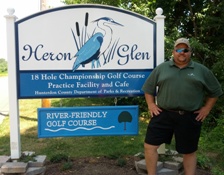
For two New Jersey golf courses run by alumni of the Rutgers University Golf Turf Management School, the term “putting green” has taken on new meaning. In fact, Heron Glen Golf Course in Ringoes and Quail Brook Golf Course in Somerset are setting benchmarks for ecological stewardship.
Do You Want to Work Outdoors as a Golf Course Superintendent?
The Rutgers Professional Golf Turf Management School gives you the training and experience you need and a respected credential that opens doors and helps you advance your career.
- Attend our Three-Week Course (held every January) to learn more about the profession or to jump-start your career if time is tight.
- Apply to our Two-Year Certificate Program if you are ready to invest serious time in your education with more in-depth training and want to get real-world experience doing an internship
As a Rutgers Turf student, you will receive instruction on a wide variety of topics related to turfgrass management, from pest management to irrigation to landscape design. This knowledge can inform your efforts to integrate environmental stewardship into your own turf management career. Specifically, students in our Two-Year Certificate Program study the Environmental Impact Quotient (EIQ), a formula created to provide growers with data regarding the environmental and health impacts of their pesticide options so they can make better-informed decisions regarding their pesticide selection.